
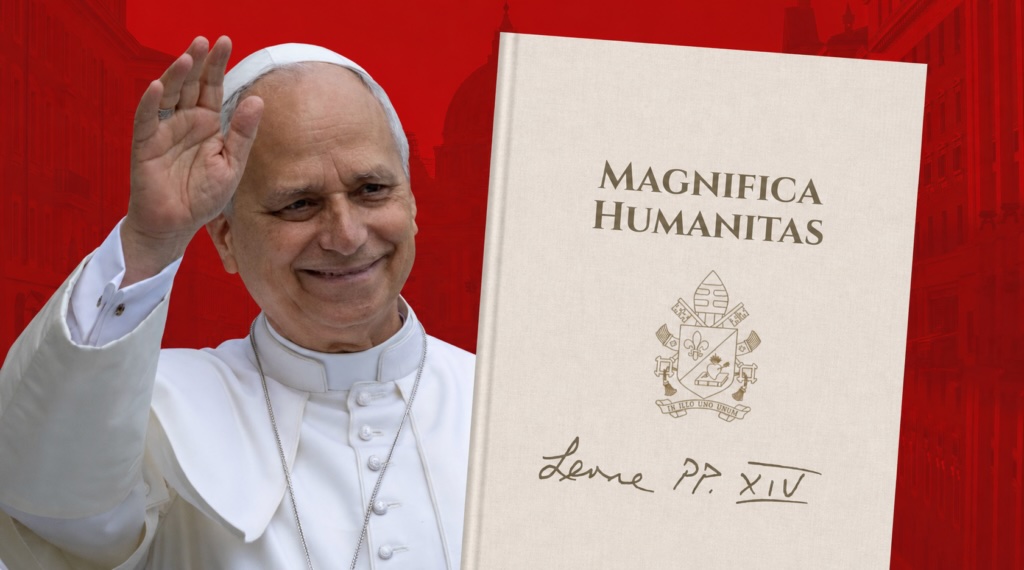




Magnifica Humanitas, Leo XIV’s first encyclical, issued 135 years after Rerum Novarum, addresses the “fourth industrial revolution.”
It raises the profound question of what it means to be human in the age of Artificial Intelligence. Above all, the document is not primarily about technology; rather, it is about what technology is asking us to understand about ourselves. It stresses the urgency of a responsibility that cannot simply wait for institutions to act.
Pope Leo XIV’s encyclical Magnifica Humanitas is a 231-page text with five chapters, plus an introduction and conclusion, that examines the pressing issues of the “fourth industrial revolution,” from the digital revolution to war, with one essential concern: “In the era of artificial intelligence, when human dignity is threatened by new forms of dehumanization, ours is the pressing duty to remain profoundly human.”
“Christian humanism does not reject science or technology, but embraces them with gratitude and realism,” because “… the true alternative is not between enthusiasm and fear, but between two paths of development: a progress that serves individuals and peoples, or a progress that subjects them to the mentality of power.”